
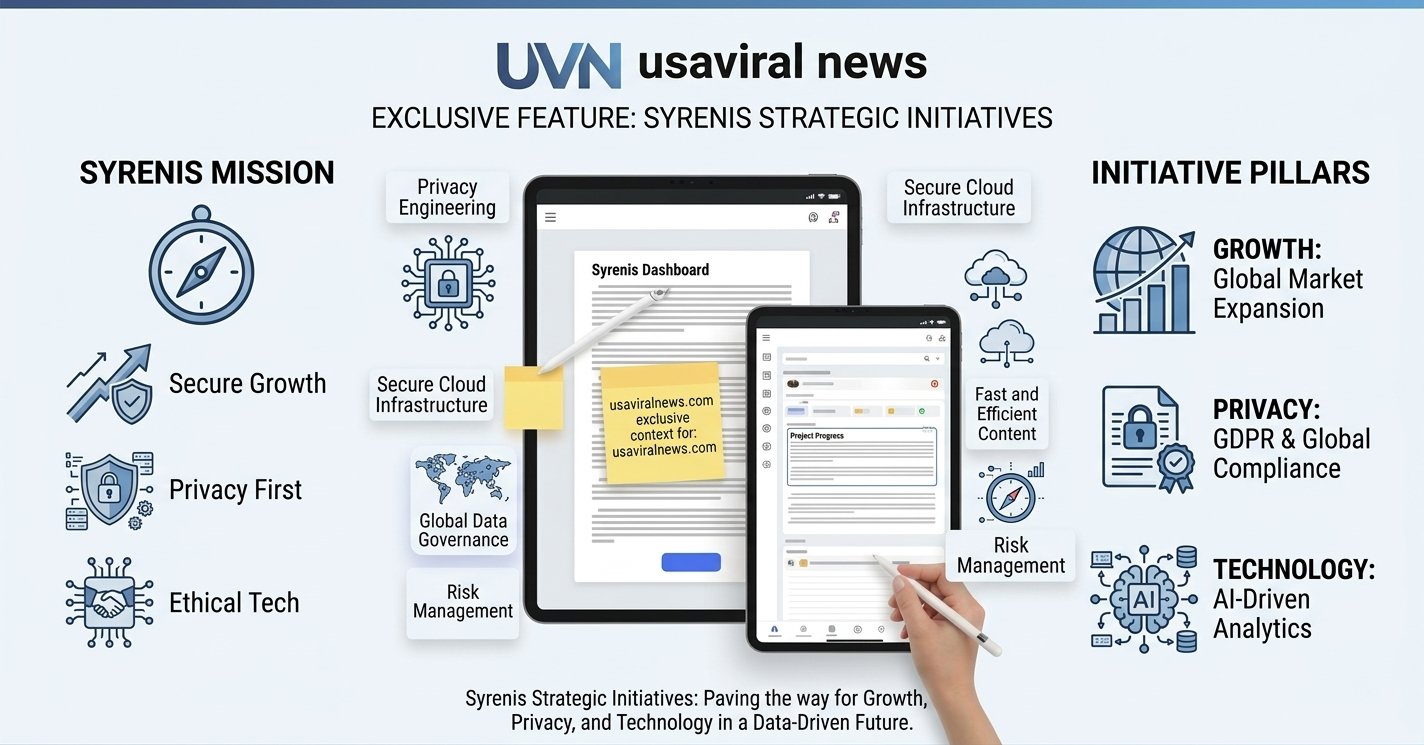
Data privacy has become a major business issue for modern companies. Businesses collect customer information across websites, apps, stores, and digital services. They also need to respect the choices people make about that information. This is where Syrenis strategic initiatives become interesting for enterprise businesses managing complex privacy needs.
Syrenis focuses on enterprise consent and preference management technology. Its platform helps organizations capture, manage, and apply customer choices across different systems. The company has also been developing its wider enterprise position during 2026. Its recent brand relaunch reflects that broader direction and market focus.
But what do these strategic initiatives actually mean? The answer goes beyond cookie banners or simple consent forms. Syrenis is working around a wider privacy infrastructure model. This includes consent, customer preferences, data integration, governance, and enterprise-scale privacy management.
What Are Syrenis Strategic Initiatives?
The phrase Syrenis strategic initiatives is not the name of one standalone product. Instead, it describes several connected areas within the company’s business direction. These areas include enterprise privacy technology, consent management, preference management, integrations, governance, customer trust, and international growth.
The central idea is fairly simple. A customer makes a privacy choice, and that choice should remain accurate. It should also reach the systems that need to follow it. This becomes much harder when a company operates many websites, applications, brands, regions, and internal systems.
Syrenis positions its platform around this challenge. Its official website highlights consent management, preference management, risk and policy, and data management and integration. These areas work together rather than operating as completely separate tasks.
This approach gives the company a broader role in enterprise privacy. Instead of focusing only on collecting consent, the technology can help organizations manage what happens afterward.
Why Enterprise Consent Management Matters
Consent management can sound like a small website task. In reality, large organizations can face a much more complicated situation. A business may have thousands or millions of customers across different markets and digital channels.
Imagine that a customer visits a company’s website. They choose certain privacy settings and reject others. That decision should not disappear after leaving the website. Other systems may also need access to the same preference information.
Marketing platforms may need the choice. Customer service systems may need it too. Analytics tools and other business systems can also depend on accurate privacy information.
This creates a data coordination problem.
Syrenis focuses on helping enterprises manage these decisions from a central platform. Its website describes a real-time source of truth across domains, devices, and identities.
That approach can make privacy operations easier to manage. It can also give teams a clearer view of customer choices.
Syrenis and Preference Management
Consent and preferences are related, but they are not always identical. Consent can answer whether a company has permission for a particular activity. Preferences can provide more detailed choices about communication and customer experiences.
For example, a customer may want email updates but reject text messages. They may accept product information while rejecting certain promotional communications.
These choices can become difficult to manage when information sits in different databases. A customer might change a preference through one channel, while another system still has an older record.
Syrenis places preference management alongside consent management. Its platform is designed to centralize customer preferences and support updates across different channels.
This is an important part of the company’s broader strategy. Modern privacy management is not only about asking for permission. It is also about respecting customer choices afterward.
A Stronger Focus on Enterprise Privacy
One of the clearest themes in Syrenis strategic initiatives is enterprise privacy. Large organizations often have more complicated privacy needs than smaller companies.
They may operate across several countries. They may also manage multiple brands and different digital properties. Each market can introduce different regulatory requirements and operational challenges.
Syrenis says its platform is designed for organizations dealing with complex regulation, fragmented systems, and global scale. This positioning places the company firmly within the enterprise technology market.
That focus also explains the company’s emphasis on centralized privacy information. A large organization needs consistency when handling customer choices.
Without consistency, privacy decisions can become difficult to track. Teams may also struggle to determine which customer preference is current.
Syrenis Strategic Initiatives and Global Growth
Global expansion is another important part of the company’s direction. Privacy requirements differ between countries and regions. Enterprises therefore need technology that can handle different rules without creating completely separate systems.
Syrenis has highlighted its ability to support different regulatory environments. Its platform includes controls for privacy policies, notices, and data subject rights. It also supports privacy management across jurisdictions.
The company’s recent brand relaunch provides another sign of its wider enterprise ambitions. Syrenis said the refreshed brand reflects the scale and complexity of the organizations it serves. It also described its evolution from a compliance tool toward a broader enterprise platform.
This shift is important because privacy technology has become a larger business category. Companies increasingly connect privacy with customer experience, data management, and responsible personalization.
The 2026 Syrenis Brand Relaunch
In April 2026, Syrenis announced a significant brand refresh. The company said it was retiring its legacy product names and bringing its identity together under the Syrenis brand.
This change is more than a visual update. It reflects how Syrenis wants the market to understand its technology.
The company described itself as an enterprise-grade platform for organizations facing complex privacy and data governance challenges. It also highlighted large regulated businesses among its target customers.
A unified brand can make a technology platform easier to understand. It can also help connect several related products and capabilities under one identity.
For Syrenis, this supports its wider enterprise strategy. The company wants privacy technology to be seen as part of broader business infrastructure.
Technology and System Integration
Enterprise privacy becomes difficult when systems cannot communicate properly. A consent choice stored in one location may have limited value if other systems cannot receive it.
This makes integration a major part of the Syrenis approach.
The company’s platform is designed to connect consent and preference information across an organization’s wider technology environment. Syrenis describes this as data management and integration. It also emphasizes real-time activation of privacy information.
This can be useful for companies with complicated technology stacks. Instead of forcing every department to work from separate privacy records, organizations can create a more consistent approach.
Integration also supports better operational control. When systems receive current preference information, teams can respond more consistently to customer choices.
Privacy, Governance, and Risk
Privacy technology is not only about customer-facing screens. Businesses also need governance behind those screens.
Organizations must know what information they collect. They also need to understand how that information is used and which rules apply.
Syrenis includes risk and policy capabilities within its current platform. Its official materials describe centralized control for policies, notices, and data subject rights.
This matters because privacy regulations continue to evolve. A business operating across several regions may need different rules for different audiences.
Centralized governance can make those differences easier to manage. It can also support stronger auditing and internal oversight.
Of course, technology alone does not guarantee compliance. Companies still need appropriate legal advice, internal policies, security controls, and responsible data practices.
Syrenis and the Future of Customer Data
Customer data has become increasingly valuable to modern businesses. Companies use information to understand customers, improve services, and create more relevant experiences.
At the same time, customers want greater control over their information.
This creates an important balance.
Businesses want useful data. Customers want transparency and meaningful choices. Regulators want organizations to follow privacy rules.
Syrenis sits within this changing environment by focusing on consent and preference data. Its platform aims to help businesses use customer information while respecting documented choices.
This could become increasingly important as businesses use more personalization and artificial intelligence. Better data governance can help organizations understand whether information is suitable for particular uses.
Syrenis itself has discussed the connection between consent, governance, and AI data strategies.
AI Makes Privacy Strategy More Important
Artificial intelligence has created another reason for companies to improve data governance. AI systems depend heavily on data, but not every data source is suitable for every purpose.
Organizations therefore need to understand where information comes from. They also need to consider whether the information was collected and processed appropriately.
Syrenis has connected this issue with consent and governance. The company argues that poor data governance can create problems throughout an AI lifecycle.
This does not mean every AI project needs the same privacy setup. Different use cases require different controls.
Still, the broader point is easy to understand. Better data decisions can support better technology decisions.
That makes privacy infrastructure increasingly relevant beyond traditional compliance departments.
Syrenis Strategic Initiatives and Customer Trust
Customer trust is another important part of this discussion. People are more aware of how companies collect and use personal information.
A confusing privacy experience can damage that trust. A clear experience can make customer choices easier to understand.
Syrenis describes its platform as a way to give customers greater control over their data preferences. It also connects privacy management with customer trust and experience.
This creates a useful shift in perspective.
Privacy does not always need to be treated as a barrier. When handled properly, it can become part of a better customer relationship.
However, trust depends on more than software. Businesses must actually respect the choices customers make.
Syrenis Strategic Initiatives Across Different Industries
Enterprise privacy problems appear across many industries. Healthcare companies manage sensitive information. Financial organizations handle regulated customer data. Retailers collect information through websites and stores.
Automotive companies now manage data from connected vehicles. Media businesses operate across many digital channels.
Syrenis lists several industries where its platform can support complex consent and preference needs. These include automotive, energy and utilities, healthcare, financial services, retail, and other enterprise sectors.
The exact privacy requirements differ by industry. A healthcare company may face different concerns than a retailer.
Still, the basic problem can remain similar. Customer choices need to be captured accurately and respected across connected systems.
What Makes the Syrenis Approach Different?
The main difference is the company’s enterprise focus. Syrenis is not presenting privacy as only a website banner problem.
Instead, the company connects consent with preferences, governance, integration, and customer data.
This wider approach makes sense for large organizations. Their privacy systems often need to work across many departments and technologies.
The company’s official platform now brings these capabilities together under the Syrenis brand. This follows the 2026 brand relaunch and its move toward a unified enterprise platform.
The real value will depend on how effectively organizations implement these capabilities. Technology is one part of a successful privacy program.
People, processes, policies, security, and governance remain equally important.
What Could Syrenis Focus on Next?
Looking ahead, several areas appear important for Syrenis. Enterprise privacy requirements will continue changing as companies expand across markets.
Integration will likely remain important because businesses continue adding new digital systems. Customer preference management may also become more detailed as personalization grows.
AI governance could become another major area. Companies need stronger controls when personal data enters automated systems and AI workflows.
International expansion also remains relevant. Global businesses need privacy technology that can operate across different regulations and regions.
These are areas connected to the company’s existing platform direction. They should not be treated as guaranteed future announcements unless Syrenis officially confirms them.
Why Syrenis Strategic Initiatives Matter
The bigger story behind Syrenis strategic initiatives is the changing role of privacy technology.
Privacy once looked like a narrow compliance task for many organizations. Today, it can affect marketing, customer experience, data management, technology, and artificial intelligence.
That creates a need for systems that can manage customer choices across an entire business.
Syrenis is positioning its platform around that need. Its current strategy combines consent management, preferences, governance, integration, and enterprise privacy.
The company’s 2026 brand relaunch also shows a clear effort to present these capabilities as one broader enterprise platform.
For businesses dealing with complex privacy requirements, this area deserves attention. The exact value will depend on each organization’s systems, goals, regulations, and implementation.
Frequently Asked Questions
What are Syrenis strategic initiatives?
Syrenis strategic initiatives describe the company’s broader business and technology direction. The main areas include consent management, preference management, privacy governance, data integration, enterprise growth, and global privacy support.
What does Syrenis do?
Syrenis provides enterprise consent and preference management technology. Its platform helps organizations capture, manage, synchronize, and apply customer privacy choices across different systems.
Is Syrenis a privacy technology company?
Yes. Syrenis positions itself as an enterprise privacy technology platform. Its current offering covers consent, preferences, risk and policy, and data management and integration.
Why is consent management important?
Consent management helps organizations record and respect customer choices. This becomes more complex when companies operate many websites, applications, brands, and customer systems.
Does Syrenis only manage cookie consent?
No. Its current platform goes beyond basic cookie consent. Syrenis also highlights preference management, governance, data integration, and enterprise privacy capabilities.
Did Syrenis change its brand in 2026?
Yes. Syrenis announced a brand relaunch in April 2026. The company said it was retiring legacy product names and consolidating under the Syrenis brand.
Can Syrenis support global organizations?
Syrenis positions its platform for organizations operating across complex regulatory environments. Its materials emphasize global scale, multiple jurisdictions, and enterprise technology environments.
How could AI affect privacy strategy?
AI can increase the need for strong data governance. Organizations need to understand where data comes from and whether it can be used appropriately. Syrenis has specifically discussed the relationship between AI, consent, and governance.
Final Thoughts
The story behind Syrenis strategic initiatives is larger than consent banners. The company is building its position around enterprise privacy, customer preferences, governance, integration, and responsible data use.
Its 2026 brand relaunch also shows how the company is presenting these capabilities under one unified identity.
For large organizations, privacy can become complicated very quickly. Different countries bring different rules. Different systems hold different information. Customers can also make changing choices across multiple channels.
Syrenis is addressing this challenge through a platform designed to connect those privacy decisions. Its approach combines consent management with preferences, governance, and data integration.
The future direction will depend on customer needs, privacy regulation, technology changes, and the company’s continued product development. For now, its strategy clearly reflects a wider shift in enterprise technology.
Privacy is no longer just something businesses need to manage quietly. It is becoming part of how companies build trust, use data, and design better digital experiences.
You may also read:Blessingtide.com USA