
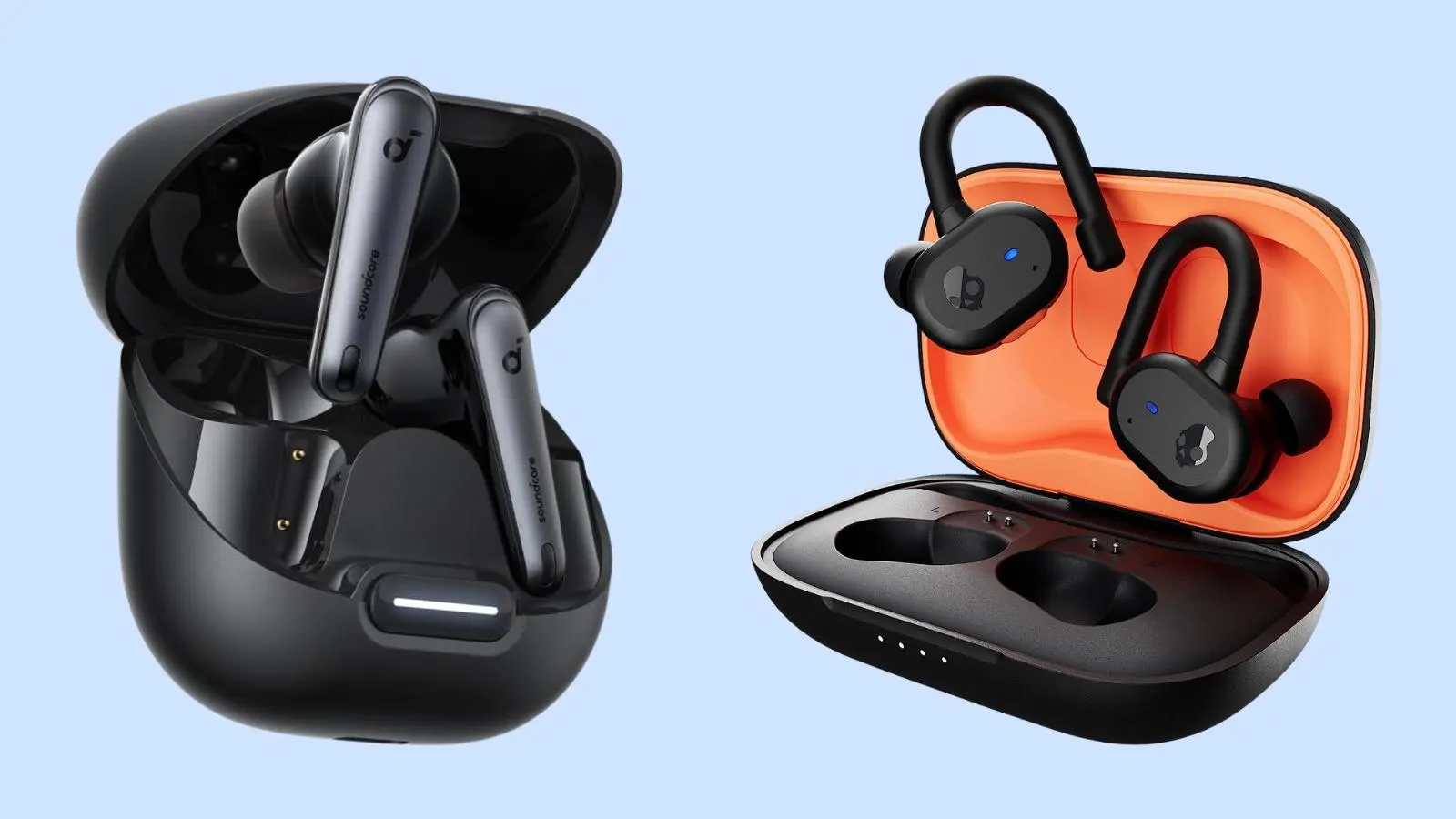
If you were shopping for wireless earbuds in 2024 with a $200 ceiling, you did not need to spend flagship money to get strong sound, active noise cancellation, multipoint connectivity, useful apps, and good battery life. The harder part was choosing between earbuds that excelled in very different areas.
For most buyers, the Nothing Ear (2024) offered the most balanced combination of sound quality, customization, comfort, features, and price. At $149, it also left considerable room in the budget. The OnePlus Buds 3 made a stronger value case at $99.99, while the Bose QuietComfort Earbuds were particularly compelling for listeners who cared most about noise cancellation. The JBL Live Beam 3 stood out for features and battery life, and the AirPods 4 with Active Noise Cancellation made the most sense for people deeply invested in Apple’s ecosystem.
Quick comparison
| Earbuds | 2024 launch or typical price | Best suited to | ANC | Maximum battery with case |
| Nothing Ear (2024) | $149 | Overall balance and sound customization | Yes | 40.5 hours |
| OnePlus Buds 3 | $99.99 | Value and Android users | Yes | 44 hours |
| Bose QuietComfort Earbuds | $179 | Noise cancellation | Yes | 31.5 hours |
| JBL Live Beam 3 | $199.95 | Features and battery life | Yes | 48 hours |
| AirPods 4 with ANC | $179 | iPhone users | Yes | Up to 30 hours, depending on mode |
| Jabra Elite 8 Active | Around $199 | Exercise and durability | Yes | Up to 32 hours |
| Sony WF-1000XM5 | Often discounted below $200 | Premium sound and ANC when on sale | Yes | Up to 24 hours with noise cancellation |
Battery figures are manufacturer maximums and are not directly comparable across brands because testing conditions differ. ANC, volume, codec, calls, and other features can substantially reduce real-world battery life. For example, Nothing rates its Ear at 8.5 hours with ANC off but 5.2 hours with ANC or Transparency Mode enabled.
1. Nothing Ear (2024): the strongest all-around choice
The Nothing Ear (2024) is one of the easiest earbuds to recommend in this price range because it does not rely on one headline feature. Its appeal comes from how many important areas it handles well.
It launched at $149 and combines active noise cancellation, Transparency Mode, wireless charging, dual-device connectivity, IP54 protection, and extensive sound customization. SoundGuys gave it an 8.1 overall rating in its review and specifically highlighted its comfort, sound, companion app, LDAC support, and value. Its main weakness was only moderate noise cancellation compared with the strongest ANC specialists.
Battery life is rated at up to 8.5 hours from the earbuds and 40.5 hours including the case with ANC off. With ANC or Transparency Mode enabled, Nothing rates it at 5.2 hours from the earbuds and 24 hours with the case.
Why it stands out
The most useful feature is arguably the level of control over the sound. If you like experimenting with bass, vocals, or treble, the Nothing X app gives you considerably more control than a basic collection of EQ presets.
That makes the Ear particularly interesting for someone who knows what they like, but does not necessarily want to spend $250 or more on premium earbuds.
Best for: music, customization, everyday listening, and buyers who want a balanced package.
Consider something else if: maximum noise cancellation is your top priority.
2. OnePlus Buds 3: the value pick
At $99.99, the OnePlus Buds 3 occupied a particularly attractive part of the 2024 market.
OnePlus rated them for up to 10 hours of playback from the earbuds with ANC disabled and up to 44 hours with the charging case. The company also advertised up to 49 dB of noise cancellation, adaptive ANC, dual-device functionality, and fast charging that could provide up to seven hours of playback after a 10 minute charge.
The important point is not that every advertised specification makes the Buds 3 better than a $150 or $200 competitor. It is that they delivered a surprisingly broad feature set without approaching the top of the budget.
The Buds 3 are particularly attractive to Android users who want strong everyday functionality without paying for premium branding.
Best for: value, Android phones, bass-forward listening, and buyers who want to spend closer to $100 than $200.
Consider something else if: you want the strongest possible ANC or a particularly refined ecosystem experience.
3. Bose QuietComfort Earbuds: the noise cancellation specialist
The Bose QuietComfort Earbuds, introduced in 2024, targeted a different priority. Bose priced them at $179 in the US, putting them directly inside the $200 budget. They offer adjustable noise cancellation, an IPX4 rating, Bluetooth multipoint, customizable EQ, and up to 8.5 hours of battery life from the earbuds.
Bose also supplied multiple ear tip and stability band sizes, which matters because ANC performance depends heavily on achieving a good seal.
This is an important distinction when comparing earbuds. Noise cancellation is not purely an electronics problem. If the earbuds do not fit your ears securely, external sound can leak in regardless of how sophisticated the ANC system is.
The QuietComfort Earbuds therefore make particular sense for commuting, air travel, offices, and other environments where reducing outside noise is more important than having the longest battery life or the most unusual features.
Best for: commuters, travelers, and people who prioritize noise reduction.
Consider something else if: you want the most advanced audio customization or the smallest possible earbuds.
4. JBL Live Beam 3: the feature packed option
The JBL Live Beam 3 took a different approach to the $200 category. Its standout feature was not hidden inside the earbuds. It was the charging case.
The case includes a touchscreen that can be used for controls and settings without reaching for your phone. JBL also lists Adaptive Noise Cancelling, six microphones, multipoint connectivity, wireless charging, spatial sound, and IP55 protection. Its stated maximum battery life reaches 48 hours, although that figure is based on conditions without ANC.
SoundGuys tested the Live Beam 3 and praised its features, sound, comfort, smart case, and LDAC support. Its testing also identified weaker ANC and the possibility of fit problems caused by the relatively short nozzles.
That combination makes the JBL particularly interesting for people who enjoy having lots of controls and features available. It is less compelling if you simply want earbuds that disappear into the background after setup.
Best for: feature enthusiasts, long listening sessions, and people who like controlling their earbuds without constantly opening an app.
Consider something else if: you care more about maximum ANC performance than features.
5. AirPods 4 with Active Noise Cancellation: the iPhone choice
For an iPhone owner, specifications alone do not tell the whole story.
The AirPods 4 with Active Noise Cancellation arrived in 2024 at $179, placing them comfortably below the $200 threshold. Their strongest argument is Apple’s ecosystem integration rather than a single specification.
They are designed around the Apple experience, so features such as automatic device switching, Siri integration, and the broader interaction between AirPods and Apple devices can be more valuable to an iPhone owner than a technically impressive codec that their phone does not support.
This is why buying earbuds should not be reduced to comparing battery numbers. The best fit depends partly on what device you already use.
Best for: iPhone, iPad, and Mac users who want tight Apple ecosystem integration.
Consider something else if: you primarily use Android and want extensive cross-platform customization.
6. Jabra Elite 8 Active: the workout option
If your earbuds need to survive workouts rather than simply accompany you at a desk, the Jabra Elite 8 Active deserve attention.
The important distinction is durability and stability. Jabra designed the Elite 8 Active around exercise, with an IP68 rating for the earbuds and a secure design intended for active use. They also support ANC and multipoint connectivity.
That makes them a different proposition from earbuds whose main strengths are sound customization or smart charging cases.
For gym sessions, running, and outdoor activity, secure fit and resistance to sweat and water can matter more than having the most sophisticated app.
Best for: workouts, running, and active use.
Consider something else if: you primarily listen at home or in a quiet office and want maximum sound customization.
7. Sony WF-1000XM5: worth considering when discounted below $200
The Sony WF-1000XM5 was a flagship class product rather than a conventional $200 earbud. Its inclusion therefore comes with an important qualification: it made sense for this price category primarily when discounted to or below $200.
Sony’s specifications include LDAC, multipoint connectivity, wireless charging, IPX4 equivalent water resistance, and up to eight hours of playback with noise cancellation enabled. With ANC disabled, Sony rates the earbuds for up to 12 hours.
What makes the XM5 interesting is the combination of high-end sound, strong noise control, and a sophisticated feature set. What makes it less straightforward as a $200 recommendation is its normal positioning above this budget.
If you found it under $200 during a 2024 sale, it was one of the more significant opportunities in this price range.
Best for: buyers who can find a genuine discount and want premium performance.
Consider something else if: you want to stay strictly within products designed and priced below $200 rather than relying on a sale.
What should you actually look for in wireless earbuds under $200?
Price is an easy filter, but it should not be the main decision criterion.
Sound quality
Sound quality depends on tuning, driver design, fit, codec support, and personal preference.
A technically capable pair can still sound wrong to you if its tuning does not match your preferences. Some listeners prefer powerful bass, while others want a flatter presentation with clearer vocals.
This is why customizable EQ can be more valuable than a specification such as a larger driver.
Active noise cancellation
ANC is most useful when there is consistent external noise.
Airplane engines, buses, trains, air conditioners, and office noise are good examples. It is less straightforward with irregular sounds such as nearby conversations or sudden noises.
Fit also matters. A poor seal can undermine both passive isolation and ANC performance.
Comfort and fit
Comfort is one of the most overlooked factors in earbud shopping.
A pair can have excellent sound and impressive specifications and still be a bad purchase if the housing creates pressure or the ear tips do not seal properly.
If possible, pay attention to the included ear tip sizes and the shape of the earbuds rather than assuming that a highly rated model will fit everyone.
Battery life
Do not compare advertised case totals without checking how those figures were measured.
For example, Nothing’s 40.5 hour figure assumes ANC is off, while its rating falls to 24 hours with ANC or Transparency Mode enabled. Sony similarly reports different figures with noise cancellation enabled and disabled.
For everyday use, a reliable six to eight hours from the earbuds may be more useful than a huge case figure if you regularly have access to charging.
Multipoint connectivity
Multipoint is especially useful if you alternate between a phone and a computer.
Instead of disconnecting from one device and manually reconnecting to another, compatible earbuds can maintain connections to multiple devices.
The feature is available on several sub-$200 models, including the Nothing Ear, Bose QuietComfort Earbuds, and JBL Live Beam 3.
Which earbuds should you choose?
The easiest way to narrow the list is to start with your most important use case.
| If you care most about… | Look at… | Why |
| Overall balance | Nothing Ear | Strong sound, customization, comfort, and useful features |
| Spending as little as possible | OnePlus Buds 3 | Broad feature set at roughly $100 |
| Noise cancellation | Bose QuietComfort Earbuds | ANC is a central part of their design |
| Features | JBL Live Beam 3 | Smart case, spatial sound, multipoint, LDAC, and long rated battery |
| iPhone integration | AirPods 4 with ANC | Designed around Apple’s ecosystem |
| Exercise | Jabra Elite 8 Active | Secure design and high water resistance |
| Premium performance on sale | Sony WF-1000XM5 | Flagship class features when discounted below $200 |
The key takeaway is that there was no single specification that made an earbud the right choice for everyone. The $200 category in 2024 was competitive precisely because different models emphasized different strengths.
Are wireless earbuds under $200 worth buying?
Yes. The 2024 market showed that you could get genuinely advanced wireless earbuds without moving into flagship pricing.
The Nothing Ear offered extensive customization at $149. OnePlus pushed a broad feature set into the $100 range. Bose focused on noise cancellation at $179. JBL put an unusually feature rich charging case into a $199.95 product. Apple’s AirPods 4 brought ANC into a $179 model designed around its ecosystem.
The important caveat is that spending the full $200 does not automatically buy a better experience. A $100 pair with the right fit and features for your phone can be more useful than a $200 pair whose strengths you never use.
Do expensive earbuds always sound better?
No.
Price can buy better components, stronger ANC, more sophisticated processing, better microphones, premium materials, and additional features. But sound quality is also heavily influenced by tuning and fit.
The Nothing Ear is a good example of why price alone is an imperfect guide. SoundGuys praised its sound, comfort, app, and value despite its $149 launch price.
The more useful question is not “Which earbuds cost the most?” It is “Which earbuds spend their budget on the things I actually care about?”
What about battery life with ANC enabled?
Expect less battery life than the headline maximum.
Nothing provides a particularly clear example. Its Ear is rated for 8.5 hours with ANC off, but 5.2 hours with ANC or Transparency Mode enabled.
Sony’s WF-1000XM5 is rated for up to eight hours with noise cancellation enabled and up to 12 hours with it disabled.
The lesson is simple: compare battery figures under similar conditions rather than choosing the largest number in a specification table.
Are earbuds with ANC better for calls?
Not necessarily.
Noise cancellation and microphone performance solve different problems. ANC primarily reduces what you hear, while microphone processing determines how clearly other people hear you.
That distinction matters for people buying earbuds for meetings. A pair can be excellent for blocking office noise while still producing mediocre voice quality in a windy environment.
If calls are your priority, look for independent microphone testing rather than assuming that strong ANC automatically means strong call quality.
Final thoughts
The best wireless earbuds under $200 in 2024 were not defined by one universal winner. They occupied different parts of the same decision.
Nothing Ear made the strongest all-around case for someone who wanted good sound, extensive customization, and a broad feature set without spending the entire budget. OnePlus Buds 3 made sense when value was the priority. Bose QuietComfort Earbuds focused on noise cancellation, while JBL Live Beam 3 emphasized features and battery life. AirPods 4 with ANC were the natural fit for people already using Apple’s ecosystem, and Jabra Elite 8 Active addressed buyers who needed durability for exercise.
The smartest way to shop the category is therefore to choose the feature you will notice every day, then spend the rest of the budget around it. That approach is more useful than simply buying the most expensive earbuds that happen to fall below $200.
You may also read:Magazine Luiza Email Format